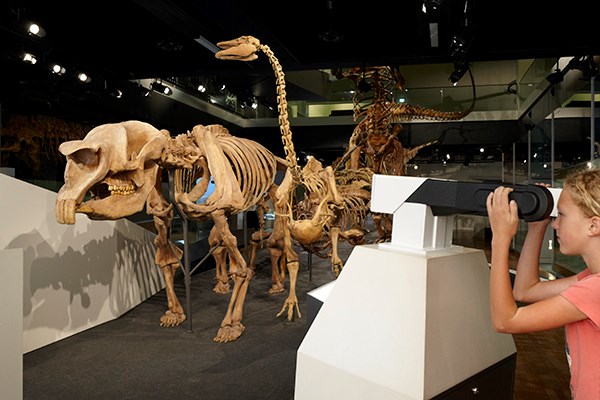
Meet Australia’s megafauna
The name megafauna means “big animals”, and it refers to animals that evolved millions of years after the dinosaurs became extinct. The extinction of dinosaurs 65 million years ago left a void of large land animals worldwide. Over millions of years, the surviving mammals, birds and reptiles evolved to include some very large animals. The megafauna were at their largest and most widespread less than a million years ago.
Australia’s megafauna were unique, and included giant marsupials such Diprotodon, huge flightless birds such as Genyornis and giant lizards such as Megalania.
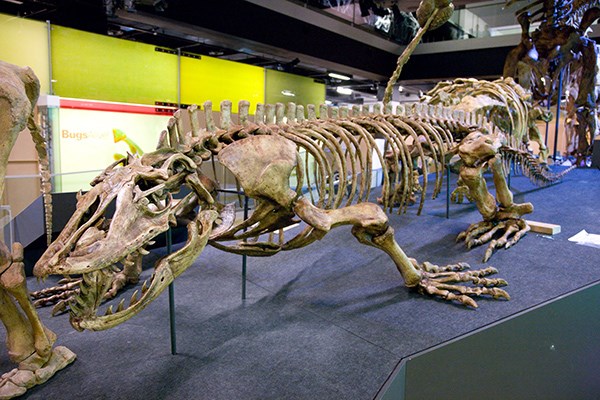
Megalania – the largest land lizard
Meg-ar-lane-ee-ar
Varanus (Megalania) priscus
Cast from fossil discovered at Darling Downs, Queensland
Megalania was the largest land-dwelling lizard on Earth. It was a monitor lizard, closely related to present-day goannas.
Megalania probably preyed on large animals such as Diprotodon, as well as on smaller mammals, reptiles and birds. It was also a scavenger, feeding on whatever carcasses it could find.
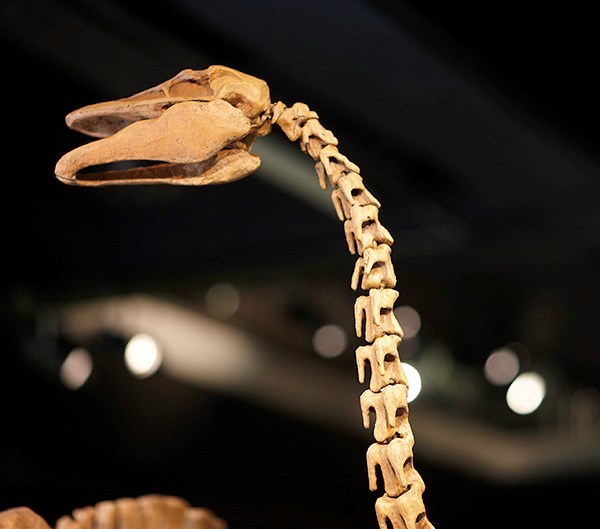
Genyornis – a “thunder bird”
Jen-ee-or-nis
Genyornis newtoni
Cast from fossil discovered at Lake Callabonna, South Australia
Genyornis was a large flightless bird, somewhat like a large emu but more closely related to ducks and geese.
Genyornis ate plants, but may have added to its diet by scavenging or grabbing small prey. Like many birds today, it used “gizzard stones” in its digestive system to grind food.
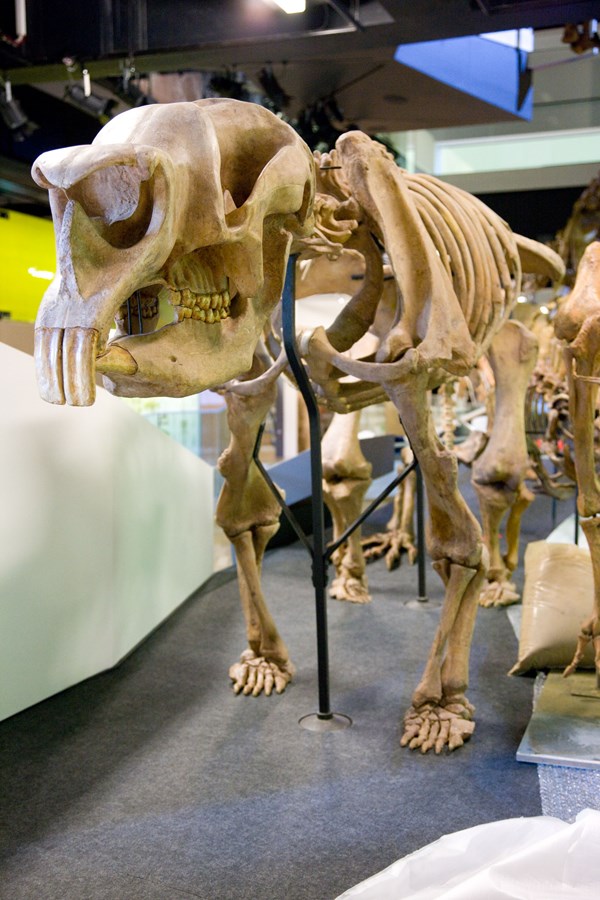
Diprotodon—the biggest marsupial ever
di-pro-toe-don
Diprotodon optatum
Cast from fossil discovered at Lake Callabonna ,South Australia
Diprotodon is the largest and heaviest marsupial to have ever lived. It was one of the megafauna—the large animals that evolved long after the dinosaurs.
Diprotodons were widespread throughout the woodland and grassland habitats of Australia, where they fed on leafy shrubs.
Fossil Diprotodon skulls, skeletons and footprints have been found in many locations around Australia