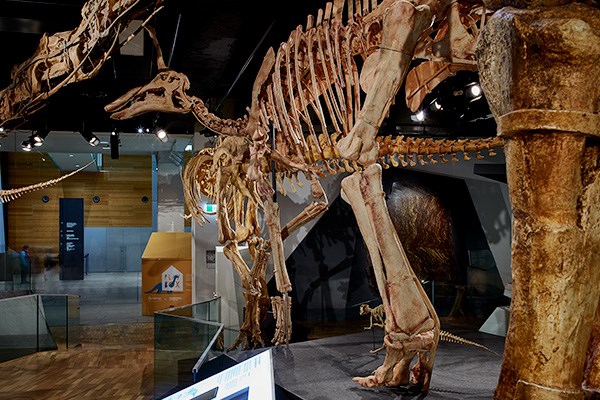
Meet the ornithopods—the two-legged herbivores
Ornithopod (or-nith-o-pod) dinosaurs moved on two legs, although larger species probably walked and grazed on all fours.
Ornithopod dinosaurs had a horny beak for nipping off plants and very effective teeth for chewing tough plant fibres. They became successful and diverse in the Cretaceous period, replacing the sauropods as the main type of herbivorous dinosaur.
Fossils of ornithopod dinosaurs have been found on all seven continents.
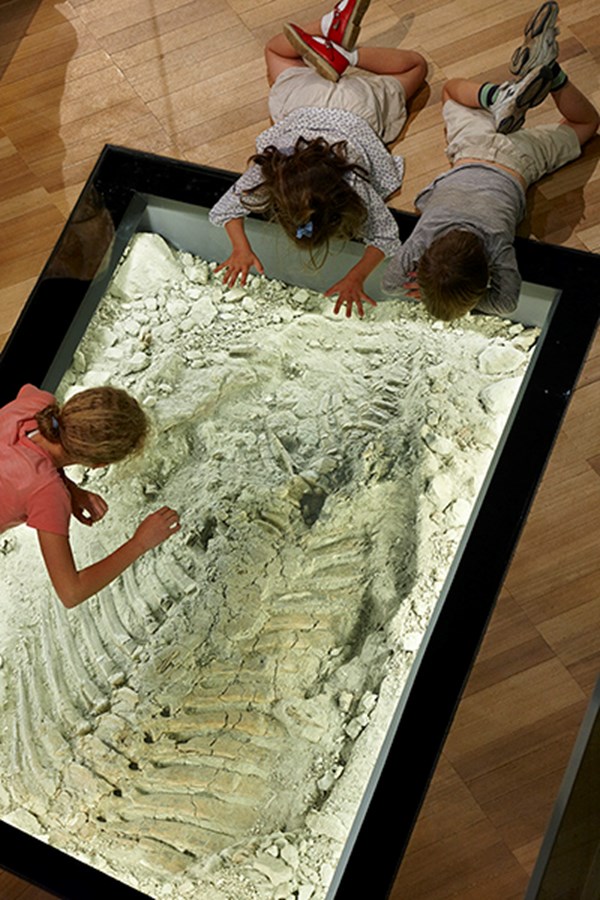
Hadrosaur
Had-row-sore
Fossil discovered in Canada
Under the floor is the fossil of a hadrosaur, a duck-billed dinosaur. It was discovered by palaeontologists from the Royal Tyrell Museum, in Alberta, Canada. As well as bones, the fossil preserves something quite special – dinosaur skin.
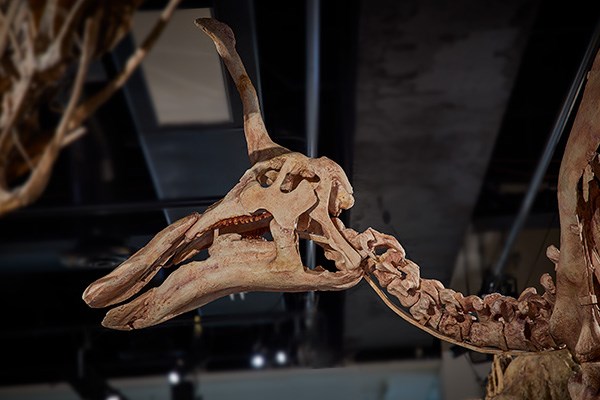
Tsintaosaurus – a chewing machine
Sin-tow-saw-rus
Tsintaosaurus spinorhinus
Cast from fossil discovered in China
Tsintaosaurus belongs to a group of ornithopod dinosaurs called hadrosaurs. It was an efficient plant eater, first ripping off plants with its “duck bill” and then thoroughly chewing them with its teeth.
Tsintaosaurus may have had an upright horn, but it is hard to be sure what it looked like until more specimens are found with the horn in place.
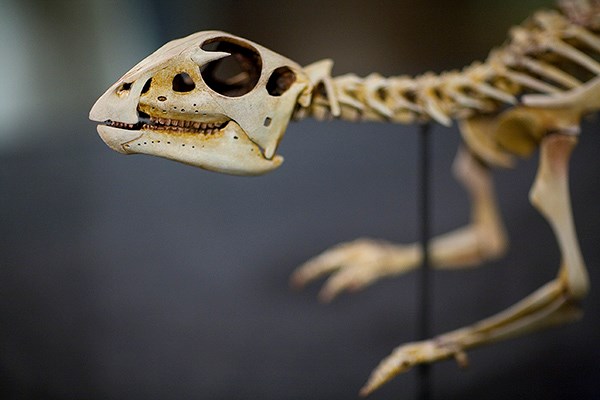
Hypsilophodon – a vegetarian sprinter
Hip-see-loff-o-don
Hypsilophodon foxii
Cast from fossil discovered in England
Hypsilophodon walked on two legs. Its light skeleton and long legs would have allowed it to run fast, using its stiff tail for balance.
It fed on low-growing vegetation and was an efficient chewer, with muscular cheeks.