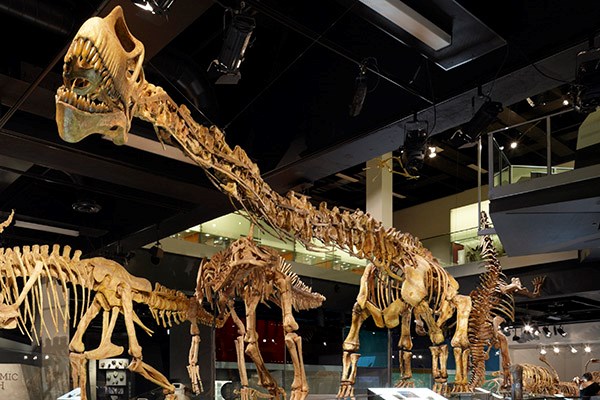
Meet the sauropods—the plant eating giants
Sauropods (sore-o-pods) were a group of plant-eating dinosaurs that including the largest land-dwelling animals of all time. Their evolution was in response to the environmental opportunities of the Jurassic and Cretaceous periods, which brought warm conditions and plentiful plant food.
Sauropods, in turn, had an impact on the ecology of the forests they inhabited – eating large volumes of plants, knocking over trees and creating paths through the forest. Insects and small mammals also lived at this time, and some would have benefitted from the activities of these large animals.
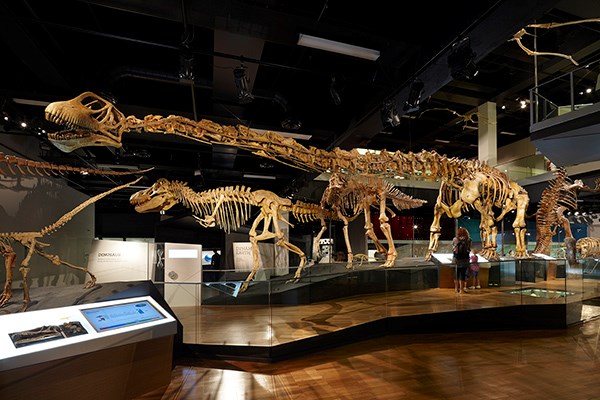
Mamenchisaurus – with a far reaching neck
Mah-men-chee-sore-us
Mamenchisaurus hochuanensis
Cast from fossil discovered in China
This plant eater’s neck is 11 metres long, one of the largest necks of all time! Notice the overlapping spines on its vertebrae, which give the neck its strength.
Fossilised footprints of Mamenchisaurus suggest that they lived in herds. They walked with adults on the outside of the herd to protect the young, who were more vulnerable to predators.
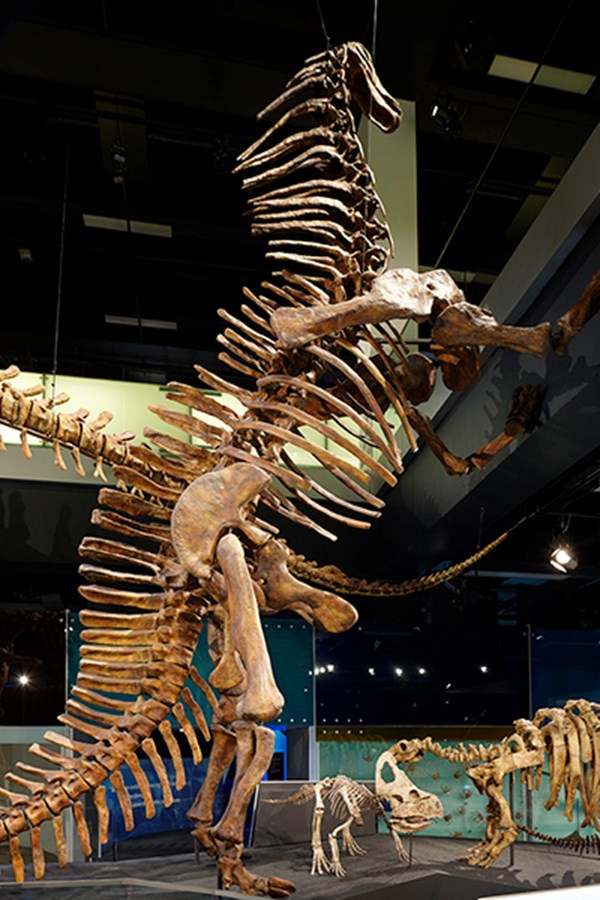
Amargasaurus – with spines or a sail
A-marg-a-sore-us
Amargasaurus cazaui
Cast from fossil discovered in Argentina
This medium-sized sauropod walked mostly on four legs, but occasionally would have reached up on its hind legs to bite taller plants.
It had distinctive spines along its neck. They may have been for defence, or could have supported a skin sail to regulate its temperature or to communicate.