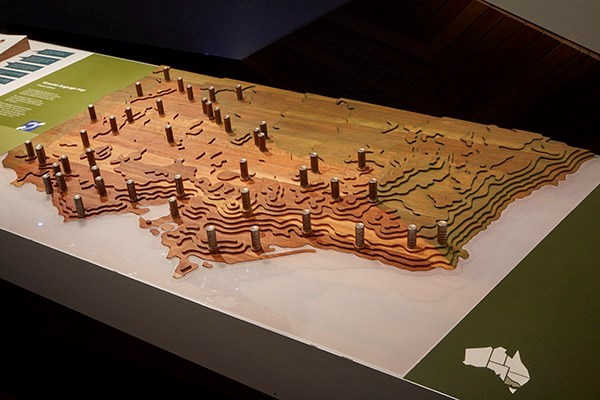
Victorian language map
Diverse cultures
This language map represents the diversity of Aboriginal culture in Victoria and our connection to Country. Each language is deeply rooted to that land.
The voices you hear on this map represent different language groups – groups of families or clans that speak that language.
These languages are all part of larger language families, such as eastern Kulin, western Kulin, Gunditjmara or Gunaikurnai. There are eleven language families in Victoria and those families speak a common language, more similar than dissimilar.
Language, culture and identity
Knowing who you are
Language is your identity – it identifies who you are and where you come from. This applies to all languages, even Australian English. You can be anywhere in the world and you will pick an Australian speaking in the same café as you because that’s how we identify each other.
Language is the essence of who you are. It tells you where you come from, your connection to Country and where your Country is.
Knowing your language, knowing your history, your culture, strengthens your identity and that applies to anyone in the world, not just Aboriginal people. Without speaking that language, you’re missing a huge chunk of your identity.
Reviving language
Our dream
In Victoria, loss of language has occurred through several generations. Today not many Elders speak the language; they remember hearing language from their Elders, but that knowledge wasn’t passed on.
Our dream is for our children to be bilingual speakers. But we would also like the wider community to have an appreciation of our languages, and be able to speak them.
We are committed to getting language and culture into schools, and have written curriculum and educational resources. In time, this knowledge will spread and our languages will be learnt by all people, not just Aboriginal people.
Paul Paton, Gunnai, Monaro; executive officer, Victorian Aboriginal Corporation for Languages